A Stay at Home Mum?
Exploring the stigma of unpaid care work
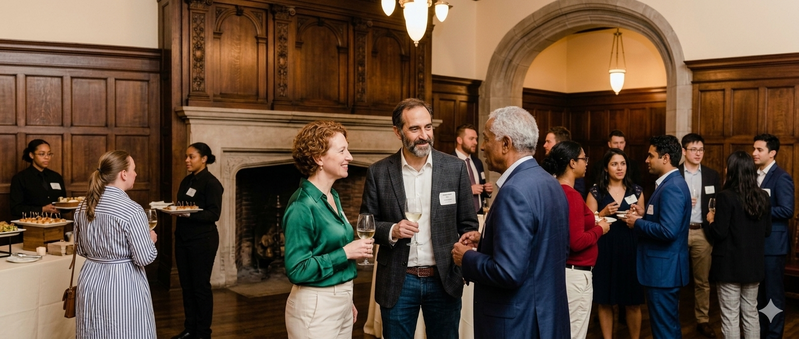

Recently, I attended a public talk at a sandstone university. Afterwards, there were drinks, hors d'oeuvres, and the inevitable question: what do you do? It would have been easy to feel an identity crisis about being a stay-at-home mum. But there was no doubt in my mind. I felt very clear that the care work I do is valuable.
This was a progressive academic environment. I expected to be taken seriously. I didn’t expect people to be confused. So I gave an honest answer: “I am a stay-at-home mum.”
The reactions took me by surprise. One woman laughed like it was a joke, and said, “But what do you really do?”
“I really am a stay-at-home mum,” I said.
She looked hurt and tried again, “Ah, so this is your way of not telling me what you really do.”
Five minutes later, I was asked again by someone else. They looked confused as well, and said I was being modest, maybe even secretive.
When I got home and recounted the night to my partner. “I thought in that context you would give your academic credentials,” he said. “Like how you went to Oxford.”
But I'm not in academia right now. It didn’t seem relevant. Wasn’t my current situation enough? Apparently not.
The Stay-at-Home Mum Identity Crisis
Many women have written about the loss or change of identity that comes with motherhood. Perhaps best covered by Lucy Jones in her fabulous book Matrescence: On the Metamorphosis of Pregnancy, Childbirth and Motherhood.
Being at home all the time with only small children for company gets lonely. For plenty of women, it's also boring and unrewarding. The labor of caring for small children is exhausting and relentless, and it is hard to quantify the effort or value of the tasks involved.
By comparison, paid work offers a clear sense of accomplishment. At the very least, we get paid a quantifiable amount for our time. At best, we get camaraderie, problem solving, recognition of our talents, and a sense that our time and effort is valued.
For the most part in paid jobs, our time is our own - we can go to the toilet unaccompanied, without worrying that some unthinkable disaster will unfold while we are out of the room. And it is finite - we go home at the end of the day where we can be a different version of ourselves, think about different things, and have different responsibilities.
Not everyone has the choice to work or stay home. But when offered the choice, very few women these days will choose to stay in that liminal and unrewarding world of motherhood over the concrete validation of the workforce. Isn’t it worthy of curiosity that someone would choose to be a stay-at-home mum?
And is it so shocking for a stay-at-home mum to be politically engaged, interested in philosophy, and attending academic events?
I’ve fought hard to accept my role as a stay home mum. The reasons why I ended up in this position are complex. But ultimately putting my family first is what matters most to me right now. And that evening I felt proud that I didn't feel like I had to trot out a resume of past experiences to justify my presence at an academic event. I felt like my current reality was enough, even if other people didn’t.
Reclaiming the Value of Care Work
Talking it over with my partner later that evening, I felt a deep solidarity with second wave feminists. Those women in the sixties and seventies who fought so hard to be taken seriously. Both as mothers and homemakers, and as employees who could and should be in the workforce.
Women are now allowed to work paid jobs. And we have made progress towards equal pay for equal work. But we still don’t pay feminised caring work like nursing, aged care, cleaning and childcare the same way that we pay masculinised work like software engineering, banking or politics. We still ascribe a totally different value to the private work that goes on in the home compared to the public work that organises society. And we clearly still don’t value the unpaid work that goes on in the home.
How to Cope with the Stigma of Being a Stay-at-Home Mum
This experience showed me that the judgement is real. It isn’t just in my head. People really do think that being a stay-at-home mum isn’t a valid or interesting role to have in society. So what can stay-at-home mums do?
Believe in ourselves - we can see that the work we do is important, even if others don’t value it.
Maintain hope - remember how far we have come. It is only in the last century that women have been allowed to work the same jobs as men, that women have been allowed to have bank accounts, to have custody of our children. Attitudes have changed a lot, and continue changing. Doing something unexpected is always going to be challenging, but that doesn’t mean it is wrong. We might be unusual, but we’re not alone.
Be proud of our choices - we are doing the best we can, and if other people can’t see that, it is their loss. We don’t have to justify ourselves, especially not to people who aren’t willing to be curious.
Comments
Shout it loud and clear Monique.
You and Jon are doing a fine job of parenthood and you articulate your experiences so well.
Thanks Rosie! Your support means everything! :-)
The most important job, caring for future humans!
Love this, care work for young and old is so underappreciated in our society. Beautifully written.
Thanks Indigo! Glad you liked it. :-)