Why I homeschool my autistic child
An honest 6 month review after school refusal and burn out

Six months into our homeschool journey, I'm still trying to find the words to explain why we are doing it. Just the fact that we are doing something unexpected is challenging enough in itself.
Concerned family and friends ask, “Surely there’s a school somewhere he can go to? Have you tried such-and-such school?”
I find these questions hard. I ask myself if I've done enough research, if I've considered enough options. My words falter. How do I be fair to my child while also expressing that school didn’t work for him and may never be an option? How do I explain that I never wanted this, and I don’t really know what I’m doing, but this seems to be the right path—at least for now?
The Realities of Autism Burnout and School Refusal
At the beginning of the year, we sent our son to our local school to start kindergarten. We knew it would be challenging. He has a diagnosis of Autism Level 2, a “low to moderate” IQ, and a host of sensory challenges. He had been at daycare three days a week and needed a lot of support. But he’s a curious kid who loves learning, so I was hopeful he might like the structure and routines of "big school."
The school said everything was going well. He was accessing his regulation tools: he wore his own version of the uniform, used a calm tent, wore ear defenders, and used a chew necklace. His teacher was caring and adapted routines to support him, and the staff all told me he was delightful.
But at home, it was a different story.
He was so anxious he couldn’t sleep at night, and every step to get ready in the morning was a struggle. We saw escalating aggression, violence, toileting regressions, and severe meltdowns. His tolerance for basic daily tasks plummeted.
The world can be an overwhelming place for an autistic person. Any new environment, change in routine, or shifted expectation can feel shocking. When our son is stressed, he forgets how to do basic self-care tasks like eating, getting dressed, or using the toilet. When the stress peaks, any request feels like too much and he goes into meltdown: kicking, screaming, crying, hurting himself, hurting others, and collapsing with apparent muscle weakness.
Arriving at school each morning, he wanted me to stay in the classroom for at least half an hour. The school discouraged this, assuring me he was fine once I left. But looking at his behavior at home, I knew the truth: he was masking, and he was not fine.
His attendance dropped below 40%.
One afternoon at pickup, the Student Learning Support Officer (SLSO) was waving to him, repeating in a loud voice, “Goodbye! Didn’t we have a good day? Say goodbye! Didn’t we have a great time?”
My son couldn’t speak. His body thrummed with emotion, but the SLSO couldn’t see it. On the way home, he cried with a deep sadness that I had never seen before. That night, I emailed the school to withdraw his enrollment and applied for homeschool.
We had lasted three and a half weeks.
Why the School Environment Is Disabling, Not My Child
Around the time of our son’s diagnosis, The Guardian published a series on autism in Australian schools. It was shocking. Autistic kids experience far poorer learning outcomes, high rates of suspension, isolation rooms, and extreme restraint measures.
Through online support groups, Belongside and Plumtree, I have heard heartbreaking stories from parents advocating to schools that refuse to adapt, and pulling their kids out due to severe school trauma.
But it isn’t just autistic kids who are struggling. Our school system is under immense strain:
Teachers are burned out and leaving the industry in droves.
Students are over-monitored and over-measured, with both mental health and academic outcomes plummeting.
Inequality is rising, with public sector enrolments decreasing as parents seek better options.
Many families who homeschool didn’t plan to. They’re doing it because their neurodivergent children experienced "school can't" or severe school refusal. As Pavlina from the Home Education Network reminds parents: people are not disabled—environments are disabling.
"If a flower doesn’t bloom, you fix the environment in which it grows, not the flower." ~ Alexander Den Heijer
How can I justify putting my child into an environment that makes him the problem? Reflecting on his short experience in mainstream school, he said: “My school didn’t know how to deal with me.”
What’s the Evidence? Is Homeschool Working?
It didn’t happen overnight, but after six months of trial and error at home, our son is happier and more regulated than we’ve ever seen him:
Daily Demands: He sits and eats dinner, takes his bowl to the kitchen, and helps cook and clean up. He accepts that his LEGO creations must eventually be packed away.
Communication: He uses words to express his boundaries instead of lashing out.
Affection: For the first time, he has started saying, "I love you, Mum." He seeks cuddles and climbs into my lap when he is upset.
Socializing: He wants to leave the house and spend time with other kids.
The dots are finally connecting for me as his parent. When he was at daycare or school, he came home exhausted from masking all day. His behavior felt random and unpredictable. Now, because I am with him all the time, I can see the patterns and understand his triggers.
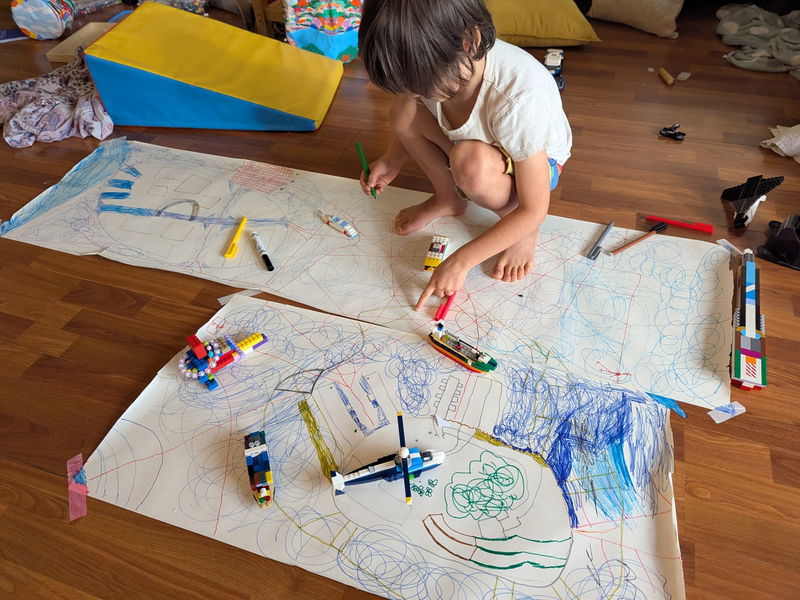
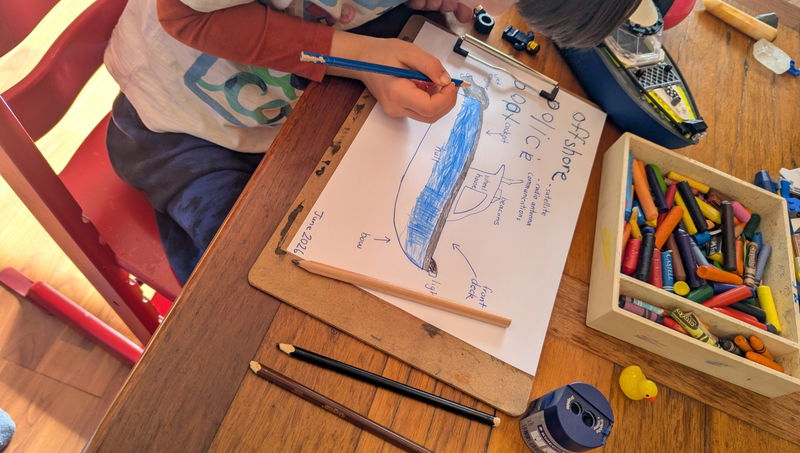
And he is learning—in a flexible, unstructured way. He learns math through LEGO, literacy through shared reading, and writing by drawing maps and diagrams.
The Grief and Loneliness of Homeschooling
All of this is great for our son. But it takes a profound toll on me.
I feel isolated and depressed. I’m tired of the constant vigilance required to anticipate my child’s needs, monitor his environment, and mediate tasks so that he can manage daily life.
Recently, I had coffee with another mum who was terrified about her own autistic child starting school. With our hands wrapped around our mugs, she looked at me straight and said, “Tell me everything! Don’t you want your life back?”
My voice faltered again. I gave a half-answer because I wasn’t ready to admit the truth: Yes, I do want my life back. I wish my kid could go to school.
I’m grieving the easier, expected path. I’m grieving the school community—chatting at the gate, going to birthday parties, and joining the P&C. And I’m grieving my working life, which feels so far out of reach that I can't allow myself to think about it.
A part of me wishes there were a local school that could accommodate our son’s needs without destroying our peace at home. But the reality is that school wouldn’t solve our challenges. Our son is autistic. He has complex learning needs. He finds things difficult that the rest of us barely notice. Caring for him is hard.
It’s hard to admit, but I’m grieving that my child is autistic.
I’m sad that we’re not sharing this milestone moment of starting school with our peers and our local community. We’re left out, and it is lonely and isolating.
But my child is brilliant, curious, thoughtful, and highly articulate. He doesn’t score well on standard tests, but anyone who meets him can see his intelligence and his passion for understanding the world. I want to give him the best chance at life—and right now, his needs are best met at home.
Resisting that truth, and constantly searching for alternatives, is harder than accepting it.
Most people assume homeschooling is a temporary blip for us before we go back to “normal.” But I need to let go of “normal.” I need to stop researching alternative schools and care arrangements. I need to trust that we are on the right path—at least for now. And focus on finding ways to sustain myself on this journey.

Comments
No comments yet. Be the first to comment!